I didn’t learn objectivity from a single mentor. I learned it from an army. In film, there are modelers, texture artists, lighters, supervisors, producers—so many hands and opinions that your own taste gets sharpened by constant friction. You discover that art can be done well, and it can be done poorly, and the difference isn’t mystical—it’s visible when you know where to look. That training forced me to step back, to ask “Is this working?” It taught me to walk away and return with fresh eyes, because the distance between you and the work is the most truthful lens you have.
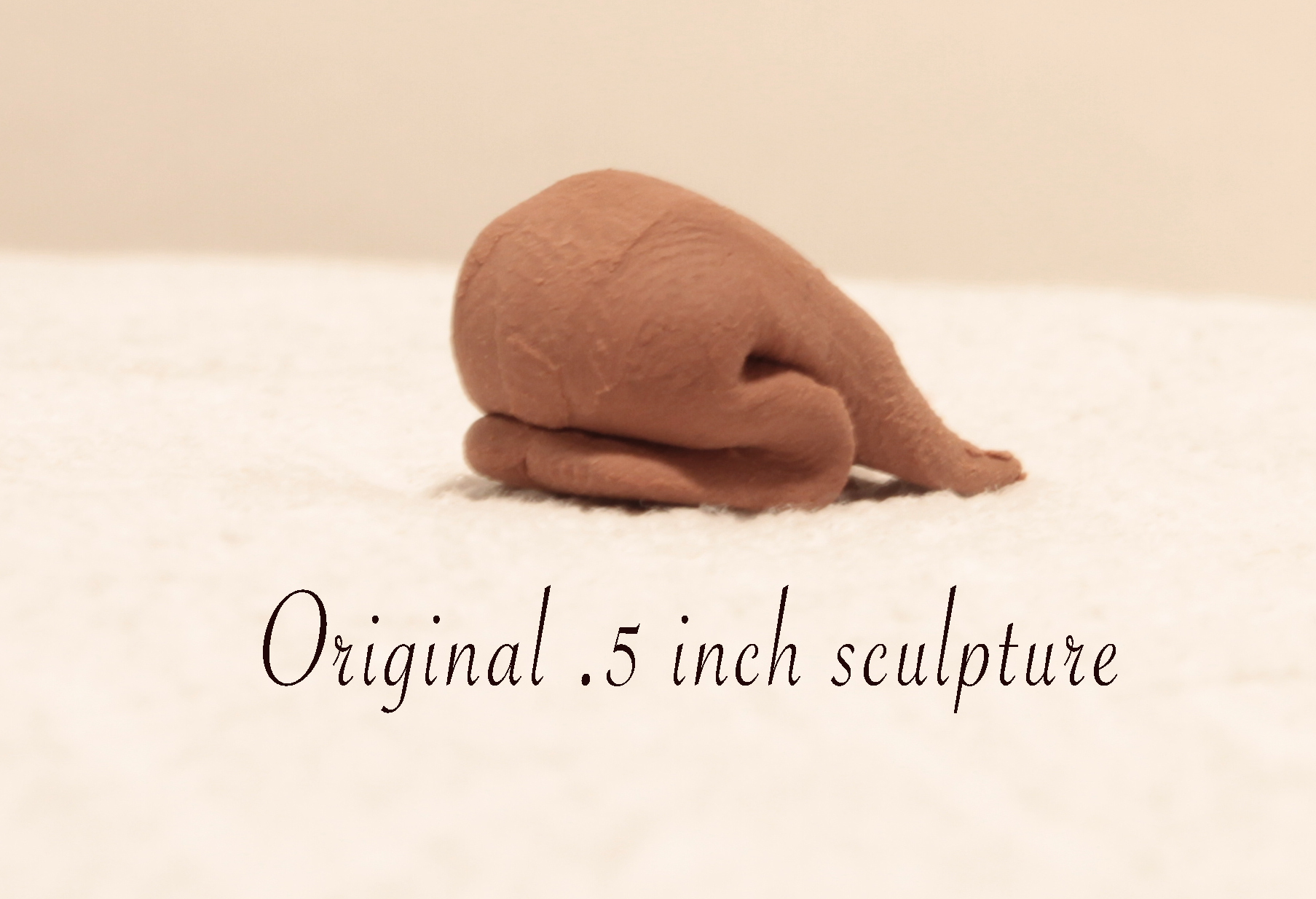
After thousands of hours and hundreds of sculptures, the habit becomes a skill: you learn to see. Not just what a form is doing, but what it’s trying to do—and what’s getting in the way. That “developed eye” becomes transferable; it belongs less to the medium and more to the maker. Clay, bronze, pixels—same eye.
But there’s another part of growth: risking simplicity.
Objectivity is great when the vision is given to you but you are creating that vision it all changes. My figurative work maintains its energy through texture. I distilled this down to the “master’s touch”—that idea that one decisive gesture can carry the weight of a piece. I set a constraint that felt almost reckless: reduce the work to a single pinch and fold of clay. No elaborate armatures, no ornamental detail—just one move and whatever honesty it held. I made a small series under that rule. They carry echoes of what I do today but they’re not as successful as finished artworks... and I’m okay saying that out loud...because those pieces were seeds. They clarified what mattered: tension, release, the courage to stop early, the humility to keep going. They showed me how far one gesture can travel—and where it falls short. They taught me that objectivity isn’t cold; it’s compassionate. It lets you name what’s not working so you can protect what is.
.
So when I return to the studio now, the eye I earned in film and sculpture is still the same, but the stakes are different. I create the vision from the emotion. If a form can hold in a pinch, it can hold at any scale. And if something isn’t there yet. I walk away. I come back. I see it in a new emotional light.
Don’t me wrong, I still love sculpting realism or hyper real as it is called sometimes but it is less work as the answer are right in front gf you. Sculpting an emotion…That’s always been the work.
contact Us
links